

Environmental strategy
From the outset, Getlink has been committed to low carbon transport and to preserving the environments in which its infrastructure is located. Responsible, ambitious and pragmatic, the Group is deploying a strategy and concrete actions to respond to the climate and environmental emergency.
Reducing our direct and indirect greenhouse gas emissions
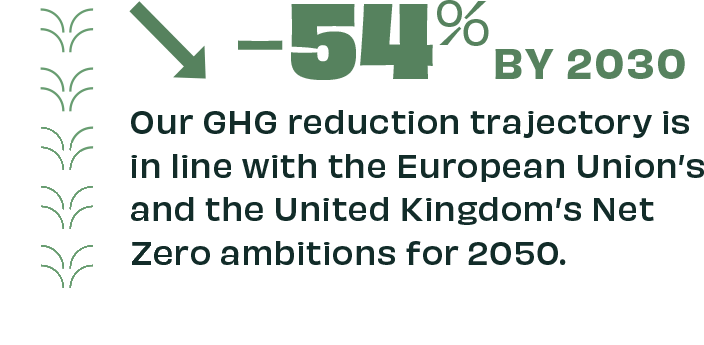
In line with European targets and to contribute to the 2°C pathway of the Paris Agreement across the entire value chain, Getlink has set itself the ultimate goal of achieving carbon neutrality by 2050, building on medium-term milestones focused on reducing intrinsic emissions.
Having exceeded its target of a 30% reduction in Scope 1 and 2 emissions by 2025, the Group is now aiming for a 54% reduction across the same scope by 2030, compared with the 2019 baseline year.
Linking financial and climate performance: the low-carbon margin indicator
In 2022, Getlink was the first industrial and services organisation to create a financial indicator in anticipation of the gradual Europe-wide application of the “polluter pays” principle. It is thus creating a new indicator, which will be monitored every year: the decarbonised margin indicator.
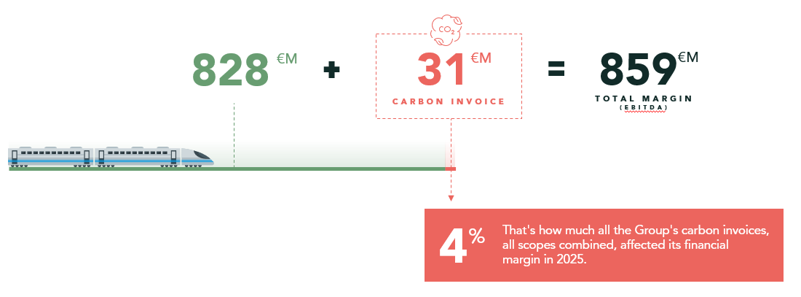

« Our 96% decarbonised margin confirms the sustainability of the Group’s activities, in an objective way that is comparable with our peers. »
Biofuels: a key driver in reducing the intrinsic GHG emissions of Europorte, our rail freight subsidiary
The consumption of natural gas, fuel oil, petrol and diesel accounts for the Group’s largest source of emissions (excluding Scope 3), ahead of emissions linked to electricity.
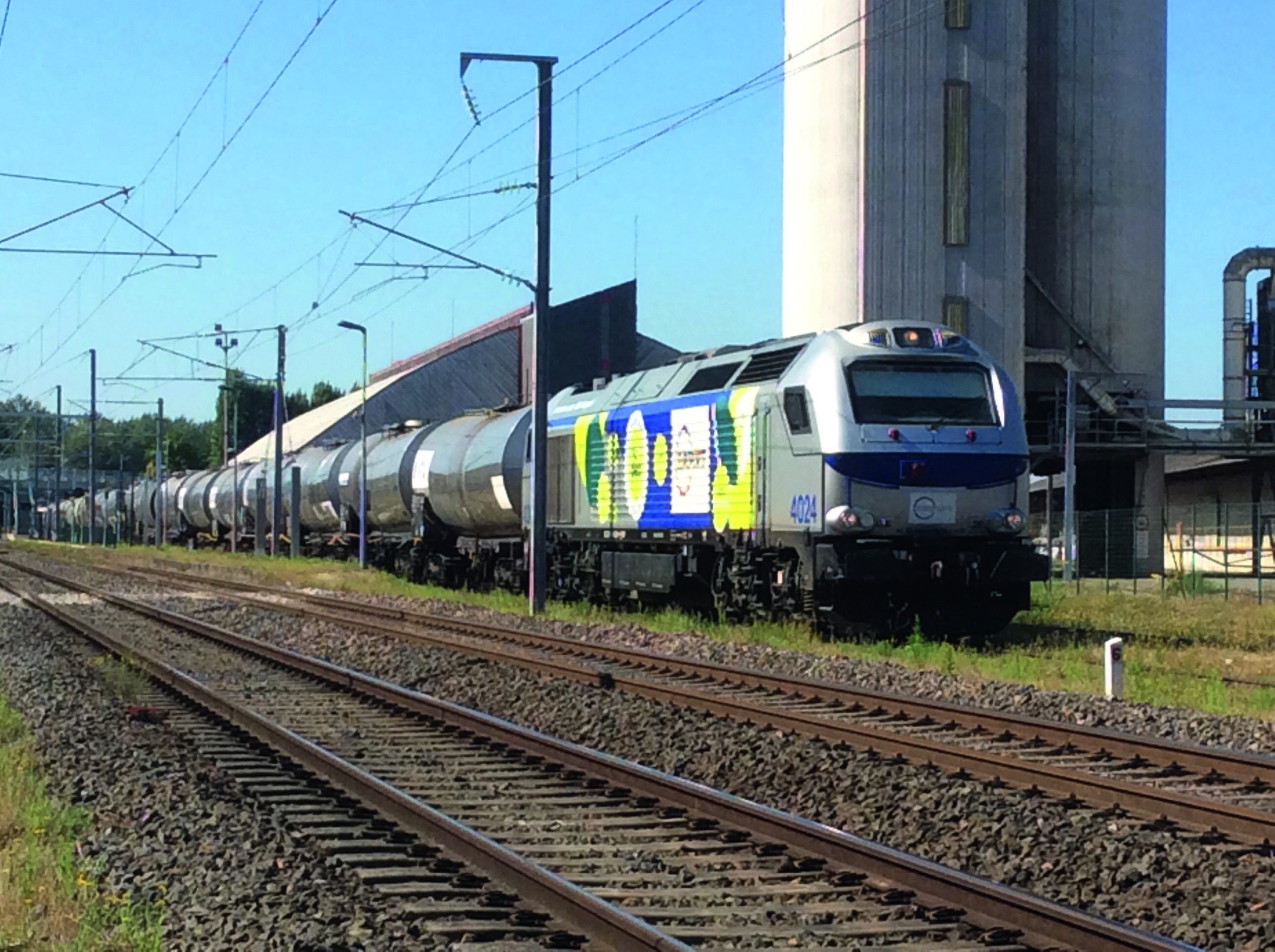
Although rail freight is already more environmentally friendly than road freight, it can further improve its climate performance by using biofuels on non-electrified sections of the network. In 2021, we were the first to trial, in partnership with Europorte, the replacement of locomotive GNR with Oleo100 biofuel produced by Saipol (a subsidiary of the Avril Group).
This biofuel, produced from 100% French rapeseed residues, reduces GHG emissions by 60%.
Today, Oleo100 accounts for 21% of the fuel used by Europorte, thereby preventing the emission of nearly4,500 tonnes of CO2 per year.
*non-road diesel
Controlling waste and promoting the circular economy
In the area of waste management, Getlink applies a collection and processing strategy that gives priority to recycling, recovery and reuse. The Group is committed to strict discipline in this area, particularly on major rolling stock and infrastructure renewal projects.
As an example, from 2021 to 2023, the 6 first-generation Truck Shuttles (“Breda” type) will be gradually replaced by new Shuttles with reduced maintenance costs.

-
80%
is our waste recovery rate in 2024 for the Group
-
1900
tonnes of ballast reused at the UK terminal in 2021
-
98%
of the weight of Breda shuttles between 2021 and 2023 been recycled
Helping to preserve natural environments
Committed from the outset to preserving natural environments, the Group operates some of the most environmentally-friendly mobility solutions and infrastructures. Its initiatives to protect biodiversity, control water consumption and improve air quality are an integral part of its development strategy.
For several years now, the Group has been working to reduce the use of plant protection products, which are used in particular to maintain green and mineral spaces, and to keep safety equipment and railway areas in operational condition. At the French terminal, outside areas subject to railway safety requirements, 100% of phytosanitary products have been replaced by mechanical and manual weeding techniques.
Getlink is also committed to monitoring and controlling air quality and the impact of emissions from its activities. For Eurotunnel, this has been a concern since the start of the Concession in 1986.
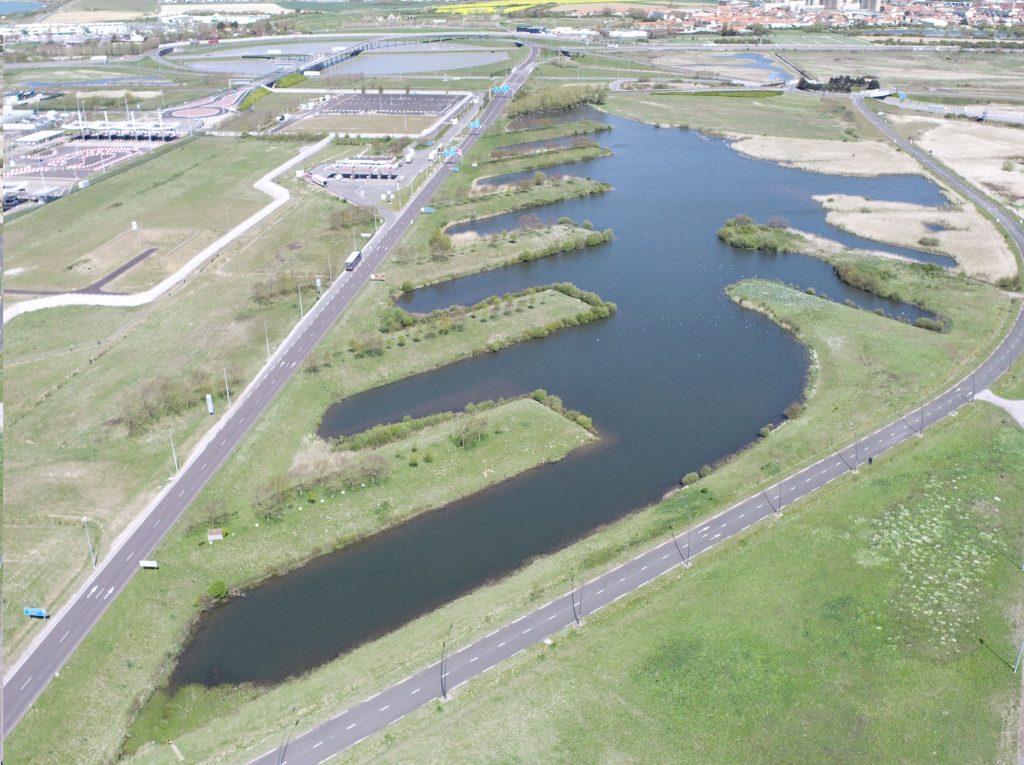
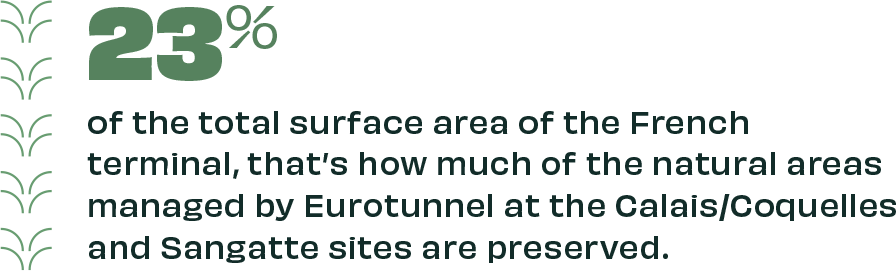
The “Ornamental Gardens” on the edge of the Coquelles terminal are a much-appreciated rest area for migratory species and an essential nesting spot for many birds.